For the last decade, Apple has been a leading player in the smartphone market. They produce new iPhone’s just about every year and although some argue that the tech inside the phone is always behind that of Android phones, there is no doubt that the design of the phone itself and the aesthetics (not to mention quality) are what keep people coming back to buy the iPhone every chance they get.
But while Apple has relied on the iPhone as the primary revenue generator (especially since Steve Jobs’ passing and Tim Cook’s rise to CEO), there is another market in which Apple has made a significant influence, and has plenty of room for growth in the years to come, and that is the wearables market. Although obviously not as popular as the iPhone, there is plenty of demand for all of Apple’s new wearables, and just like the iPhone, they are constantly pushing the boundaries to what wearables can and should be for the everyday person.
Let’s start by discussing the Apple AirPods. Although there were plenty of Bluetooth headphones out before the AirPods came along, not many were completely wireless, which became the norm just as soon as Apple released their first AirPods. The fact that they come with a charging case that can help keep your AirPods charged all day makes it all the more enticing for people who are out and about all day long, or who simply can’t find the time to charge their AirPods over and over again – just a single charge at night and you can rely on your charging case to keep your AirPods juiced all day long.
And the quality of the AirPods is second-to-none in our opinion. Not only is the sound absolutely fantastic, but the AirPods themselves are very sturdy and seemingly impossible to break (the same can be said about the charging case as well). And when Apple just recently released their new AirPods Pro, it came with major changes, including interchangeable earbuds to fit your ear perfectly, as well as a noise-cancelling feature. Clearly, Apple is not just resting on their laurels and are continuing to push the boundaries on just this one product line.
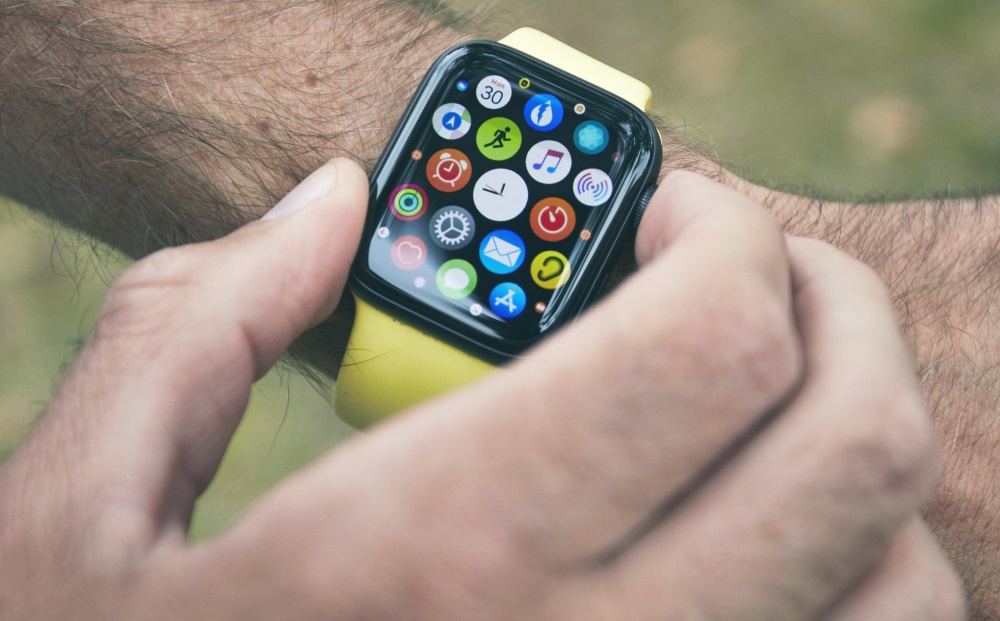
But Apple has also come out with the Apple Watch and is constantly improving that product line as well. The Apple Watch was previously viewed as a gimmicky side project of Apple, with little to no real purpose – after all, who wanted to be able to see when they received a text if they would just pull out their phone to send a text back? However, constant improvements and features has created a small yet powerful device that is almost as useful as the iPhone itself. Although the relative demand of the Apple Watch is still somewhat small, the fact that other companies with similar products such as Fitbit are losing market share just goes to show that Apple is turning a corner in this space.
With regards to wearables as a whole, Apple has done surprisingly well given the amount of time and energy they continue to put into their iPhone development. Although this may not necessarily be surprising when you consider that wearables go hand-in-hand with phones themselves. Without the iPhone, having AirPods or an Apple Watch becomes effectively useless. And along those same lines, although an iPhone can be great on its own, it is only when you connect various wearable devices like the AirPods, or the Apple Watch do you truly unlock all that your iPhone has to offer.
So while many people are complaining that Apple hasn’t truly come up with anything game-changing like the iPhone or iPad since Tim Cooks has taken over the company, the reality is that they have done something just as substantial in giving their flagship product multiple new avenues for enhanced usage through wearables. These products may seem small and insignificant on their own, but when paired to a powerhouse like the iPhone, they instantly become a necessity for the avid Apple consumer. And as long as the iPhone remains a huge hit with consumers, Apple’s wearables such as the AirPods or the Apple Watch will continue to have their fair share of success and continue to further dominate the entire wearables market!